What Is a Secured Credit Card and How Does It Work?
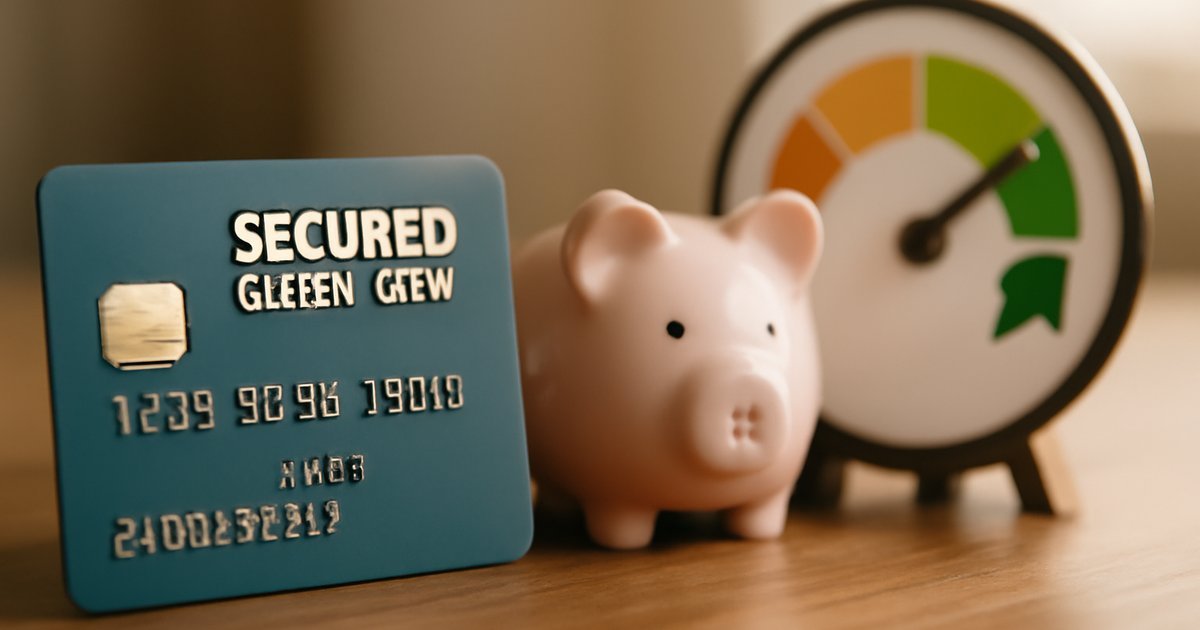
A secured credit card is a type of credit card that requires you to make a refundable cash deposit upfront. That deposit — typically ranging from $200 to $2,500 — acts as your credit limit and serves as collateral for the card issuer.
Unlike a prepaid debit card, a secured card is a real line of credit. Your payment activity gets reported to all three major credit bureaus: Equifax, Experian, and TransUnion. That means every on-time payment builds your credit history — and every missed payment damages it.
Here’s how the basic mechanics work:
- You deposit $300 with the issuer (say, Capital One or Discover).
- You receive a credit card with a $300 limit.
- You use it like any regular card — groceries, gas, subscriptions.
- You pay your bill monthly, ideally in full.
- After 6–18 months of responsible use, many issuers upgrade you to an unsecured card and return your deposit.
According to the Consumer Financial Protection Bureau (CFPB), approximately 45 million Americans are considered "credit invisible" or have scores too thin to generate a standard credit score. Secured cards are one of the most reliable tools to change that — at any age.
Who Should Use a Secured Credit Card?
Secured cards aren’t just for college students. In fact, they’re often most valuable for working adults who’ve hit a financial rough patch or who never had the chance to build a strong credit profile.
You might benefit most from a secured credit card if you:
- Have a credit score below 580 (considered "poor" by FICO standards)
- Are recovering from a bankruptcy, foreclosure, or debt settlement
- Are a recent immigrant with no US credit history
- Have been denied for an unsecured credit card in the last 12 months
- Are a small business owner who needs to separate personal and business expenses but can’t qualify for a business card yet
If you’re in your 30s, 40s, or 50s and dealing with damaged credit, don’t let pride get in the way. A secured card is a practical, legitimate financial tool — not a punishment. Think of it as a short-term investment in your long-term creditworthiness.
Key Benefits of Secured Credit Cards
Beyond basic credit building, secured cards offer several real financial advantages that are often overlooked.
1. Guaranteed approval path. Most secured cards have very lenient approval requirements. Even if you’ve had a bankruptcy discharged within the last two years, you can often qualify. The Federal Reserve’s 2024 Report on the Economic Well-Being of US Households found that 28% of adults had difficulty accessing mainstream credit — secured cards directly address this gap.
2. Credit utilization control. Since your credit limit equals your deposit, you can strategically keep your utilization ratio low. FICO recommends staying under 30% utilization — with a $500 limit, that means keeping your balance at or below $150 per month.
3. Fraud protection you don’t get with debit cards. Secured cards carry the same federal protections as any credit card under the Fair Credit Billing Act. Your maximum liability for unauthorized charges is $50 — and most issuers offer $0 liability policies.
4. Potential upgrade to unsecured credit. Issuers like Discover, Capital One, and Citi actively monitor secured card accounts and offer automatic upgrades — often within 7 to 12 months. When that happens, your deposit is returned, and your credit limit typically increases.
5. Cashback and rewards. Some secured cards — like the Discover it Secured — offer 2% cashback at gas stations and restaurants, plus 1% on all other purchases. You can earn real rewards while rebuilding your credit.
How to Get Started: Step-by-Step
Getting a secured credit card is straightforward, but a few strategic choices early on will dramatically affect your results.
- Check your current credit score for free. Use AnnualCreditReport.com or free tools through your bank or credit union. Know where you’re starting from.
- Compare secured card options carefully. Not all secured cards are created equal. Look for cards with no annual fee or a low annual fee (under $35), a clear path to upgrade, and reporting to all three bureaus. Avoid cards charging monthly maintenance fees, processing fees, or program fees that eat into your deposit.
- Choose your deposit amount strategically. If you can afford to deposit $500 instead of $200, do it. A higher limit makes it easier to keep your utilization below 30%, which is one of the biggest factors in your FICO score (it accounts for 30% of your total score).
- Apply and fund your deposit. Most applications are completed online in minutes. You’ll need your Social Security number, bank account information, and a source of income. The deposit is held in a savings account by the issuer.
- Use the card regularly but strategically. Charge one or two recurring bills to the card — a streaming service, a monthly utility — and pay the full balance every month. This establishes a pattern of consistent, responsible use.
- Set up autopay immediately. Payment history is the single largest factor in your credit score — it accounts for 35% of your FICO score. One missed payment can set back your progress by months. Autopay eliminates that risk.
- Monitor your credit monthly. Tools like Credit Karma, Experian, or your card issuer’s app let you track your score in real time. Most secured card users see measurable score improvement within 3 to 6 months of consistent use.
Costs, Fees, and Risks You Need to Know
Transparency matters — especially in credit. Here’s what secured cards can cost you, and where to watch out.
Annual fees: Many secured cards charge $25–$50 per year. Some charge nothing. The Discover it Secured, for example, has no annual fee. Always factor this into your decision.
High APR (Annual Percentage Rate): Secured cards typically carry high interest rates — often between 22% and 29% APR. According to Bankrate’s 2026 data, the average credit card APR sits above 20%. The good news: if you pay your balance in full each month, you’ll never pay a dollar in interest, regardless of the APR.
Deposit is tied up: Your $300 or $500 deposit isn’t accessible while the account is open. Don’t deposit money you need for emergencies. Consider building a small emergency budget before locking funds into a secured card deposit.
Predatory secured cards: Some issuers — typically subprime lenders — charge excessive fees that consume your entire credit limit. A card with a $300 limit and $250 in fees leaves you just $50 in usable credit. Always read the full fee schedule before applying.
Closing the account early: Closing a secured card before upgrading can hurt your credit by reducing your total available credit and potentially lowering the average age of your accounts. Plan to keep the account open for at least 12 months.
Common Mistakes to Avoid
Building credit with a secured card sounds simple — and it is, if you avoid a few costly errors that derail many cardholders.
Mistake #1: Maxing out the card every month. Carrying a balance near your credit limit every month signals financial stress to lenders. Even if you pay it off, high utilization during the billing cycle shows up on your credit report. Keep spending below 30% of your limit — ideally closer to 10%.
Mistake #2: Making only minimum payments. Minimum payments are a debt trap. On a $300 balance at 28% APR, paying just the minimum each month could take years to clear and cost you significant interest. Pay the full balance every month — full stop.
Mistake #3: Ignoring your credit report. The IRS allows you to dispute errors on your credit report, and the CFPB estimates that one in five Americans has an error on at least one credit report. If inaccurate negative items are dragging your score down, disputing them at no cost through AnnualCreditReport.com can boost your score faster than almost anything else.
Mistake #4: Opening too many secured cards at once. Each application triggers a hard inquiry on your credit report, which temporarily lowers your score by a few points. Applying for three or four secured cards in a single month signals desperation to lenders. Apply for one, use it responsibly for 6–12 months, then reassess.
Mistake #5: Forgetting to request an upgrade. Some issuers upgrade automatically; others require you to ask. After 12 months of clean payment history, call your issuer and request a review for an upgrade to an unsecured card. If they say no, ask what specific benchmarks you need to hit.
Alternatives to Consider
A secured card is one of the best credit-building tools available, but it’s not the only option. Here are three alternatives worth comparing:
1. Credit-builder loans
Offered by credit unions and community banks, a credit-builder loan works in reverse: the lender holds the loan amount in a savings account while you make monthly payments. Once paid off, you receive the funds. This is excellent for people who struggle with the temptation to overspend on a card. The downside: you don’t get immediate access to the money, and interest rates vary widely.
2. Becoming an authorized user on someone else’s card
If a spouse, parent, or trusted family member with excellent credit adds you as an authorized user on their account, their positive history can appear on your credit report. You don’t need to use the card — or even have it in your possession. The risk: if the primary cardholder misses payments, it can hurt your score too. Learn more about how card activity affects your score in our guide on how credit cards affect your credit score.
3. A credit union share-secured loan
Similar to a credit-builder loan but backed by your own savings account. Credit unions typically offer lower rates and more flexible terms than big banks. If you already have a credit union membership, this can be a faster path to credit improvement with fewer fees.
If you’re also considering other ways to manage debt or finance large goals alongside credit building, you might find it useful to read about personal loans for major purchases to understand how different credit products can work together in your financial plan.
Frequently Asked Questions
How long does it take to improve my credit score with a secured card?
Most cardholders see measurable improvement — typically 20 to 50 points — within 3 to 6 months of consistent, on-time payments and low utilization. Rebuilding from a very low score (below 550) to a fair score (580–669) often takes 12 to 18 months of disciplined use.
Do I get my deposit back?
Yes, in most cases. When you close the account in good standing or upgrade to an unsecured card, the issuer returns your full deposit — typically within two billing cycles. Make sure there are no outstanding balances before closing.
Can a secured card hurt my credit score?
Yes, if you misuse it. Late payments, high utilization, and multiple hard inquiries from new applications can all lower your score. Used correctly, a secured card is a powerful builder. Used carelessly, it can make things worse.
Is there a minimum deposit amount?
Most secured cards require a minimum deposit of $200 to $300. Some premium secured cards allow deposits up to $2,500 or more, giving you a higher credit limit. Choose the amount that lets you keep your utilization below 30% based on your typical monthly spending.
Will applying for a secured card hurt my credit score?
The application itself triggers a hard inquiry, which typically lowers your score by 2 to 5 points temporarily. This effect is minor and usually fades within 12 months. The long-term benefit of building your credit history far outweighs this short-term dip.
Final Thoughts: Is a Secured Credit Card Worth It?
If your credit score is holding you back — from qualifying for a mortgage, getting a competitive auto loan rate, or even renting an apartment — a secured credit card is one of the most cost-effective solutions available right now.
The key is treating it like the financial tool it is, not a fallback option. Make a small, regular purchase each month. Pay it off in full. Set up autopay. Monitor your score. And after 12 months of disciplined use, you’ll likely find yourself in a fundamentally different financial position.
The deposit requirement might feel like a hurdle. But think of it this way: you’re essentially paying yourself to rebuild your financial reputation. That’s a trade worth making.
As always, consider speaking with a nonprofit credit counselor through the National Foundation for Credit Counseling (NFCC) if you have complex debt or credit issues before choosing a product.
This article is for educational purposes only and does not constitute financial, tax, or investment advice. Always consult a licensed financial advisor, CPA, or attorney before making financial decisions.