
Tag: retirement planning

  • Social Security Optimization: When to Claim for Maximum Benefit

    Social Security Optimization: When to Claim for Maximum Benefit

    Social Security Optimization: When to Claim for Maximum Benefit

    Claiming Social Security at the right age could mean $100,000 or more in additional lifetime income — here’s how to make the smartest decision.

    Introduction

    According to the Social Security Administration, nearly 90% of Americans aged 65 and older receive Social Security benefits — yet most of them claim earlier than optimal, leaving tens of thousands of dollars on the table. For millions of retirees, Social Security is the single largest income source they’ll ever have. Getting the timing wrong can cost you dearly.

    If you’re between 55 and 65, you’re likely thinking about when to flip that switch. Should you claim at 62 to get money flowing sooner? Wait until your full retirement age (FRA)? Or hold out until 70 for the maximum monthly check? The answer depends on your health, other income sources, marital status, and tax situation.

    In this guide, you’ll learn exactly how Social Security benefits are calculated, when claiming early hurts you, when it makes sense, and the specific strategies that can maximize your lifetime payout. This is the Social Security optimization playbook for working professionals and small business owners approaching retirement.

    What Is Social Security Optimization and How Does It Work?

    Social Security optimization is the process of strategically choosing when and how to claim your retirement benefits to maximize the total amount you receive over your lifetime. It’s not just about getting the biggest monthly check — it’s about the right combination of timing, spousal benefits, and tax planning.

    Your monthly benefit is based on your highest 35 years of indexed earnings. The Social Security Administration calculates your Primary Insurance Amount (PIA) — the benefit you’d receive at your Full Retirement Age. Your FRA is 66 or 67, depending on when you were born.

    Here’s the key mechanic: for every month you claim before your FRA, your benefit is permanently reduced. Claim at 62 and you could lose up to 30% of your PIA forever. But for every month you delay past your FRA — up to age 70 — your benefit grows by 0.67% per month, or roughly 8% per year. That’s a guaranteed, inflation-adjusted return that’s hard to beat anywhere else in your financial life.

    The Social Security Administration reports that as of early 2026, the average monthly retirement benefit is approximately $1,920 — but optimized claimants routinely receive $2,800 to $3,822 or more per month at age 70, depending on their earnings history.

    Key Benefits of Delaying Social Security

    The financial case for delaying your claim is powerful, especially if you’re in good health. Each year you wait past your FRA adds roughly 8% to your monthly benefit. That’s a guaranteed, risk-free return — a benchmark that very few investments can match with the same certainty.

    Consider this example: Sarah, 62, has a PIA of $2,200 at her FRA of 67. If she claims at 62, she receives just $1,540 per month — a 30% reduction. If she waits until 70, she receives $2,728 per month — a 24% bonus over her FRA amount. The difference? Over $14,000 per year. If Sarah lives to 85, delaying saves her more than $120,000 in cumulative income.

    Additional benefits of delaying include:

    • Inflation protection: Your benefit is tied to cost-of-living adjustments (COLAs). A higher base means larger COLA increases each year.
    • Spousal benefit boost: If you’re the higher earner in a married couple, delaying increases the survivor benefit your spouse receives if you die first.
    • Medicare coordination: Claiming at 65 or later allows you to align Social Security with Medicare Part A eligibility, reducing out-of-pocket gaps.
    • Tax efficiency: A lower early-year Social Security benefit may keep you in a lower tax bracket during your 60s when you’re drawing down other retirement accounts.

    For small business owners who may have had variable income years, the 401(k) optimization strategies you’ve used throughout your career work best when paired with a smart Social Security claiming strategy.

    How to Optimize Your Social Security — Step by Step

    Optimizing your Social Security claim isn’t a one-size-fits-all formula. Follow these steps to build a personalized strategy:

    1. Get your earnings record from SSA.gov. Create a free My Social Security account at ssa.gov. Review your earnings history and confirm every year is accurate — errors can reduce your benefit permanently. You have the right to correct mistakes.
    2. Calculate your break-even age. The break-even age is the point at which delaying your claim becomes more profitable than claiming early. For most people, the break-even between claiming at 62 vs. 70 falls around age 80-82. If your family has a history of longevity and you’re in good health, delaying is typically the better bet.
    3. Assess your other income sources. If you have a pension, significant IRA/401(k) assets, or rental income, you may be able to live on those during your 60s and let Social Security grow. If you have no other income and must claim early to survive, that changes the calculation entirely.
    4. Map out the spousal strategy. For married couples, the optimal approach often involves the lower earner claiming early while the higher earner delays to 70. This maximizes the survivor benefit — if the higher earner dies first, the surviving spouse receives the higher amount for the rest of their life.
    5. Factor in your tax situation. Up to 85% of your Social Security benefits may be taxable if your combined income (adjusted gross income + nontaxable interest + half of SS benefits) exceeds $34,000 for singles or $44,000 for married couples filing jointly, per IRS rules. Claiming Social Security while still working can push you into higher brackets.
    6. Consider working with a Social Security specialist. CFPs and retirement income specialists can run detailed optimization scenarios using tools like Maximize My Social Security or Open Social Security. A few hundred dollars in consultation fees can unlock tens of thousands in additional lifetime income.

    Costs, Risks, and What Could Go Wrong

    Social Security optimization isn’t risk-free — the biggest risk is longevity uncertainty. If you delay to 70 and die at 74, you’ll have collected far less than if you’d started at 62. According to the CDC, average life expectancy for a 65-year-old American is approximately 83-85 years, but individual outcomes vary widely.

    Other risks and costs to understand:

    • Earnings test penalty: If you claim Social Security before your FRA and continue to work, the SSA withholds $1 in benefits for every $2 you earn above $22,320 (2026 threshold). This is not a permanent loss — withheld amounts are credited back to your benefit at FRA — but it can create short-term cash flow problems.
    • Medicare premium surcharges (IRMAA): High-income retirees pay more for Medicare Part B and Part D. If your income in 2026 exceeds $106,000 (individual) or $212,000 (married), you’ll face income-related monthly adjustment amounts that can reduce the net value of a higher Social Security check.
    • Opportunity cost of waiting: While you delay Social Security, you may need to draw down IRAs or other assets faster. Depending on market conditions and your portfolio allocation, this could affect your total retirement wealth.
    • Potential legislative changes: The Social Security Trust Fund is projected to face funding challenges in the early 2030s. While benefits are unlikely to disappear, a modest reduction in future payouts remains a policy risk — worth considering when planning decades out.

    Common Social Security Mistakes to Avoid

    These are the most expensive errors Americans make when it comes to Social Security — and how to steer clear of each one:

    1. Claiming at 62 just because you can. Sixty-two is the earliest claiming age, but it’s often the worst financial decision for healthy individuals. Many people claim early out of fear — worried Social Security won’t exist later. Unless you have serious health issues or no other income, claiming at 62 permanently sacrifices up to 30% of your monthly benefit.

    2. Ignoring the spousal benefit strategy. Married couples who both claim at the same time — especially when both claim early — routinely miss out on the optimal survivor benefit. The higher earner should almost always delay as long as possible. Failing to coordinate claims as a couple is one of the costliest mistakes in retirement planning.

    3. Not correcting your earnings record. The SSA uses your 35 highest-earning years. If any year is recorded incorrectly or missing, your benefit is understated. Reviewing your record annually at SSA.gov is free and takes 15 minutes — yet most people never do it.

    4. Claiming while still working at a high income. If you’re between 62 and your FRA and still earning strong wages, claiming Social Security can result in both benefit withholding (due to the earnings test) and higher tax liability. In most cases, waiting until you actually stop working or reach FRA is the smarter move.

    5. Overlooking divorced spouse benefits. If you were married for at least 10 years, divorced, and haven’t remarried, you may be eligible for up to 50% of your ex-spouse’s benefit at their FRA — without reducing their benefit at all. Many divorced Americans don’t know this rule exists.

    Alternatives to Pure Delay: Other Strategies to Consider

    Delaying to 70 is the most discussed strategy, but it’s not the only one. Here are three alternatives worth evaluating:

    Claim at Full Retirement Age (FRA): Claiming at 66 or 67 (depending on birth year) is a balanced middle ground. You avoid the early claiming penalty while not waiting the full additional three years to 70. For people with moderate health or who need income predictability, FRA is often the practical sweet spot.

    File and Suspend (Restricted Application — legacy strategy): Rules changed significantly with the Bipartisan Budget Act of 2015. The classic file-and-suspend strategy is largely unavailable today. However, if you were born before January 2, 1954, a restricted application strategy may still apply — consult an SSA-savvy advisor.

    Roth IRA conversions during the gap years: If you delay Social Security to 70 but retire at 65, you’ll have five years of lower income. This is the perfect window to convert traditional IRA funds to a Roth IRA at lower tax rates, reducing your Required Minimum Distribution (RMD) burden later. This pairs beautifully with a delayed Social Security claim. If you haven’t explored Roth accounts yet, learning how to grow your savings efficiently in the years leading up to retirement can significantly change your options.

    For those building supplemental retirement income through other channels, dividend investing to generate passive income is one approach that can help bridge the gap while you wait to claim at 70.

    Frequently Asked Questions

    Q: Can I claim Social Security at 62 and then suspend to get a higher benefit later?
    A: No. Once you claim before your FRA, you generally cannot suspend benefits to earn delayed credits the same way someone who waited until FRA can. Suspending after FRA to earn 8%-per-year credits is only available if you’ve already reached your full retirement age. Claiming early locks in your permanently reduced rate.

    Q: What is the maximum Social Security benefit in 2026?
    A: For someone claiming at age 70 in 2026 with maximum earnings throughout their career, the maximum monthly benefit is approximately $4,873 per month, according to the SSA. The average is much lower — around $1,920 — because most workers don’t have 35 years at maximum taxable earnings.

    Q: Does working past 70 increase my Social Security benefit?
    A: Not through delayed credits — those stop accumulating at 70. However, if your recent wages are higher than your lowest-earning years in your 35-year record, continued work can replace a lower-earning year and slightly increase your calculated benefit. In most cases, the boost is modest.

    Q: How is Social Security taxed in retirement?
    A: If your combined income exceeds $25,000 (single) or $32,000 (married filing jointly), up to 50% of your benefits may be taxable. Above $34,000 (single) or $44,000 (married), up to 85% can be taxed. State tax treatment varies — some states exempt Social Security entirely, while others partially or fully tax it.

    Q: Can my spouse receive Social Security benefits based on my record if they never worked?
    A: Yes. A non-working or lower-earning spouse can receive up to 50% of the higher earner’s PIA at their own FRA. This spousal benefit doesn’t grow further if the spouse waits past their FRA — only the worker’s own benefit grows past FRA, not the spousal benefit. Timing coordination matters here.

    Conclusion

    Social Security is likely the most inflation-protected, guaranteed income stream you’ll ever have. The decision of when to claim is one of the highest-stakes financial choices of your retirement — and it’s permanent. For most healthy Americans, especially the higher earner in a married couple, delaying to 70 delivers the best lifetime outcome. But every situation is unique, and the right answer depends on your health, your other assets, your tax picture, and your spouse’s situation.

    Your immediate next step: log in to SSA.gov, review your earnings history for errors, and run a benefit estimate across ages 62, 67, and 70. Then sit down with a fee-only CFP who specializes in retirement income to model the full picture — including taxes, Medicare, and RMDs. A few hours of planning now can mean six figures more in lifetime income.

    This article is for educational purposes only and does not constitute financial, tax, or investment advice. Always consult a licensed financial advisor, CPA, or attorney before making financial decisions.

  • Your Essential 401(k) Guide: Maximize Retirement Savings

    Your Essential 401(k) Guide: Maximize Retirement Savings

    Discover how a 401(k) can transform your retirement savings, potentially saving you thousands in taxes.

    Sarah, 38, never really understood her 401(k) beyond seeing a deduction on her paycheck. When she finally dug in, she discovered she was missing out on thousands in employer contributions, a common oversight for many Americans. In fact, a 2024 survey by Vanguard showed that nearly 1 in 4 eligible employees do not contribute enough to receive their full employer match. This scenario highlights a crucial point: your 401(k) isn’t just a deduction; it’s one of the most powerful tools for building long-term wealth and securing your financial future.

    Many working professionals, like Sarah, are busy building careers and managing daily life, leaving their retirement accounts on autopilot. But understanding and actively managing your 401(k) can make a significant difference in how comfortably you retire. This comprehensive 401(k) guide will walk you through everything you need to know.

    In this guide, you will learn the mechanics of a 401(k), its key benefits, how to optimize your contributions, the fees to watch out for, and common mistakes to avoid. By the end, you’ll have the knowledge to confidently take control of your retirement savings and maximize your potential.

    What Is a 401(k) and How It Works?

    A 401(k) is an employer-sponsored retirement savings plan that allows employees to save and invest a portion of their paycheck before taxes are taken out. This means your contributions reduce your taxable income in the current year, providing an immediate tax break. Your investments then grow tax-deferred, meaning you don’t pay taxes on the gains until you withdraw the money in retirement.

    The term "401(k)" comes from the section of the Internal Revenue Code (IRS) that established this type of plan. It’s a defined contribution plan, which means the amount you and your employer contribute is defined, but the future value of your account depends on the investment performance.

    Traditional vs. Roth 401(k)

    While the traditional 401(k) is the most common, many employers also offer a Roth 401(k) option. Understanding the difference is crucial:

    • Traditional 401(k): Contributions are made with pre-tax dollars, reducing your current taxable income. Your investments grow tax-deferred. You pay ordinary income tax on withdrawals in retirement.
    • Roth 401(k): Contributions are made with after-tax dollars, meaning they don’t lower your current taxable income. However, qualified withdrawals in retirement are entirely tax-free.

    The choice between a Traditional and Roth 401(k) often comes down to your current income and what you anticipate your tax bracket will be in retirement. If you expect to be in a higher tax bracket in retirement, a Roth 401(k) might be more advantageous. If you expect a lower tax bracket, a Traditional 401(k) could be better.

    Who It Applies To and Why It Matters

    Most employees of for-profit companies in the United States have access to a 401(k) plan. Non-profit organizations typically offer 403(b) plans, and governmental employers offer 457 plans, which are similar in principle but have some distinct rules.

    Your 401(k) matters because it’s a foundational pillar for retirement security. For 2026, the IRS contribution limit for employee deferrals to a 401(k) is $24,000. If you are age 50 or older, you can make an additional "catch-up" contribution of $8,000, bringing your total potential contribution to $32,000. These limits are set annually by the IRS and represent a powerful way to accelerate your savings with significant tax advantages.

    Key Benefits of a 401(k)

    A 401(k) offers several compelling advantages that make it an indispensable tool for long-term financial planning.

    1. Employer Match: Free Money for Your Future

    One of the most significant benefits of a 401(k) is the employer matching contribution. Many companies will match a percentage of your contributions, often up to a certain limit. For example, your employer might match 50 cents on the dollar for the first 6% of your salary you contribute. This is essentially "free money" that instantly boosts your retirement savings.

    According to Fidelity’s 2024 analysis, the average employer 401(k) match was around 4.7% of an employee’s salary. Failing to contribute enough to capture the full match means leaving guaranteed returns on the table. Always contribute at least enough to get the maximum employer match—it’s one of the easiest ways to grow your nest egg.

    2. Tax Advantages: Save Now, Save Later

    As discussed, 401(k)s offer powerful tax benefits:

    • Pre-tax Contributions (Traditional): Lower your current taxable income, potentially moving you into a lower tax bracket.
    • Tax-Deferred Growth: Your investments grow without being taxed annually. This means your money compounds faster, as earnings are reinvested without being diminished by taxes each year.
    • Tax-Free Withdrawals (Roth): If you have a Roth 401(k), your qualified withdrawals in retirement are completely tax-free, which can be immensely valuable when living on a fixed income.

    3. Compounding Growth: The Eighth Wonder of the World

    Albert Einstein is often attributed with calling compound interest the "eighth wonder of the world." With a 401(k), your contributions and employer match are invested, and those investments earn returns. Those returns then earn their own returns, creating an exponential growth effect over decades. The earlier you start contributing, the more time your money has to compound.

    4. Convenience and Discipline

    Contributions to a 401(k) are typically deducted directly from your paycheck. This automated savings mechanism fosters financial discipline, as you "pay yourself first" without having to actively transfer funds each month. Out of sight, out of mind can be a good thing when it comes to long-term savings.

    How to Get Started with Your 401(k): A Step-by-Step Guide

    Getting your 401(k) set up and optimized might seem daunting, but it’s a straightforward process. Here’s how to ensure you’re making the most of this powerful retirement tool.

    Step 1: Check Eligibility and Enroll

    Most employers automatically enroll eligible employees or provide a clear path to enrollment. Typically, you become eligible after a certain period of employment (e.g., 90 days) or reaching a specific age. Ask your HR department or plan administrator for enrollment forms and information. According to the Bureau of Labor Statistics, as of 2023, 70% of private industry workers had access to a retirement plan, primarily 401(k)s, so chances are your employer offers one.

    Step 2: Determine Your Contribution Amount

    Prioritize contributing at least enough to receive the full employer match. This is non-negotiable free money. After that, aim to increase your contributions gradually, ideally up to the annual IRS limit (for 2026, $24,000 for most, $32,000 for those 50+). A common strategy is to increase your contribution rate by 1% each year until you reach the maximum or a comfortable percentage.

    Step 3: Choose Between Traditional and Roth (If Available)

    Consider your current and projected future tax situations. If you expect your income to be higher in retirement, Roth might be better. If you anticipate being in a lower tax bracket later, Traditional could be more beneficial for immediate tax savings.

    Step 4: Select Your Investments

    Your 401(k) plan will offer a selection of investment options, typically mutual funds or Exchange-Traded Funds (ETFs). Here are common choices:

    • Target-Date Funds: These funds automatically adjust their asset allocation (stocks to bonds) as you get closer to your target retirement date. They offer a hands-off approach to diversification.
    • Index Funds: These passively managed funds aim to replicate the performance of a specific market index, like the S&P 500. They typically have low expense ratios. For a deeper dive, read our Beginner’s Guide to Smarter Investing with Index Funds.
    • Actively Managed Funds: These funds have a fund manager who attempts to outperform the market. They usually come with higher fees.
    • Individual Funds: Some plans allow you to select individual stock, bond, or sector-specific funds.

    Diversify your investments across different asset classes (stocks, bonds) and geographies to mitigate risk. Your risk tolerance and time horizon should guide your choices. Younger investors typically have a higher allocation to stocks, while those closer to retirement lean more towards bonds.

    Step 5: Designate Your Beneficiaries

    This is a critical, often overlooked step. Designate primary and contingent beneficiaries for your 401(k) account. In the event of your death, your assets will pass directly to these individuals, bypassing probate. Review and update your beneficiaries after major life events like marriage, divorce, or the birth of a child.

    Step 6: Monitor and Rebalance Regularly

    Periodically review your investment performance and asset allocation. Market fluctuations can shift your portfolio out of your desired risk profile. Rebalancing involves selling some assets that have grown significantly and buying more of those that have lagged, bringing your portfolio back to its original target allocation. Aim to do this once a year or every few years.

    Costs, Fees, and Risks of 401(k) Plans

    While 401(k)s are fantastic tools, they are not without costs and risks. Understanding these can help you make more informed decisions.

    1. Administrative Fees

    These fees cover the operational costs of managing the 401(k) plan, such as record-keeping, legal services, and customer support. They can be paid by the employer, deducted from investment returns, or charged directly to participants. A 2023 study by BrightScope and the Investment Company Institute found that the average total plan cost for 401(k) participants was approximately 0.5% to 1.5% of assets annually, with investment expense ratios being a significant component.

    2. Investment Fees (Expense Ratios)

    These are the fees charged by the mutual funds or ETFs within your 401(k) plan. They are expressed as an expense ratio, which is a percentage of your investment that goes towards managing the fund. For example, an expense ratio of 0.50% means you pay $5 for every $1,000 invested. These fees, though seemingly small, can significantly erode your returns over decades due to compounding.

    3. Early Withdrawal Penalties

    The IRS generally imposes a 10% penalty on withdrawals made from a 401(k) before age 59½, in addition to regular income taxes. There are some exceptions, such as death, disability, or withdrawals made after separating from service in the year you turn age 55 (or 50 for public safety employees). It’s crucial to understand these rules to avoid costly mistakes.

    4. Investment Risk

    The value of your 401(k) investments is subject to market fluctuations. Stocks can go up and down, and there’s no guarantee of returns. While long-term investing in a diversified portfolio tends to smooth out these risks, short-term volatility is always a possibility, especially for those with aggressive allocations.

    5. 401(k) Loan Risks

    Some plans allow you to borrow from your 401(k) account. While this might seem appealing, it carries significant risks. If you leave your job and don’t repay the loan, the outstanding balance is typically treated as a taxable distribution and subject to the 10% early withdrawal penalty if you’re under 59½. Furthermore, the money you borrowed is not invested and not earning returns, missing out on potential growth.

    Common 401(k) Mistakes to Avoid

    Even with the best intentions, many individuals make preventable errors that can severely impact their retirement savings. Be aware of these common missteps:

    1. Not Contributing Enough to Get the Employer Match

    This is arguably the biggest mistake. If your employer offers a match, it’s essentially a 100% return on your investment up to that matching limit. Leaving this "free money" on the table is a missed opportunity for guaranteed wealth growth. A 2024 Bankrate survey found that 25% of Americans aged 35-54 don’t contribute enough to get their full 401(k) employer match.

    2. Cashing Out Your 401(k) When Changing Jobs

    When you leave a job, you have several options for your 401(k): leave it with the old employer, roll it over to your new employer’s plan, or roll it into an IRA. Cashing it out should almost always be avoided. Not only will you pay income taxes on the entire amount, but if you’re under 59½, you’ll also face a 10% early withdrawal penalty. This can significantly set back your retirement savings. Instead, consider a direct rollover to an IRA, which gives you more control and investment options.

    3. Ignoring or Not Understanding Your Investment Options

    Simply choosing the default investment option, often a money market or conservative fund, might not align with your long-term goals or risk tolerance. Take the time to understand the funds available in your plan. If you’re unsure, target-date funds are a good starting point, but always verify their expense ratios and asset allocation. Failing to diversify or investing too conservatively when young can severely limit your growth potential.

    4. Not Reviewing Your Account Regularly

    Your 401(k) isn’t a "set it and forget it" account forever. Life changes, market conditions shift, and your risk tolerance evolves. Review your account at least once a year. Check your asset allocation, fund performance, fees, and ensure your beneficiaries are up-to-date. This simple annual check-up can prevent major issues.

    5. Taking a 401(k) Loan for Non-Emergencies

    While some plans permit 401(k) loans, they should be a last resort. Taking a loan means your money is no longer invested and earning returns. If you leave your job, the loan repayment clock accelerates, and default can lead to penalties and taxes. For short-term needs, prioritize building an emergency fund outside of your retirement accounts.

    Alternatives and Complementary Retirement Savings Options

    While a 401(k) is a cornerstone of retirement planning, it’s not the only tool available. Exploring other options can complement your 401(k) and provide additional flexibility and tax advantages.

    Individual Retirement Accounts (IRAs)

    IRAs (Traditional and Roth) are individual retirement accounts that you can open independently, regardless of whether you have a 401(k). For 2026, the IRA contribution limit is $7,000, with an additional $1,000 catch-up contribution for those age 50 and over.

    • Traditional IRA: Contributions may be tax-deductible (depending on your income and whether you’re covered by an employer plan), and growth is tax-deferred.
    • Roth IRA: Contributions are made with after-tax money, but qualified withdrawals in retirement are tax-free. Roth IRAs also have income limitations for contributions.

    IRAs often offer a broader range of investment choices compared to employer-sponsored plans and can be an excellent option to supplement your 401(k), especially if you’ve maxed out your employer’s plan or prefer more investment control.

    Health Savings Accounts (HSAs)

    If you’re enrolled in a high-deductible health plan (HDHP), you might be eligible for an HSA. HSAs offer a unique "triple tax advantage":

    1. Contributions are tax-deductible.
    2. Investments grow tax-free.
    3. Qualified withdrawals for medical expenses are tax-free.

    Many financial advisors consider HSAs to be a "super IRA" for retirement, particularly for healthcare expenses. Unused funds roll over year to year and can be invested. After age 65, you can withdraw funds for any purpose without penalty, though non-medical withdrawals will be taxed as ordinary income.

    Taxable Brokerage Accounts

    For savings beyond your 401(k), IRA, and HSA limits, a taxable brokerage account is an excellent option. While these accounts don’t offer the same immediate tax benefits or tax-free growth, they provide complete liquidity and flexibility. You can withdraw funds at any time for any purpose without penalty, though investment gains will be subject to capital gains taxes.

    Frequently Asked Questions

    1. Can I have a 401(k) and an IRA simultaneously?

    Yes, absolutely. Having both a 401(k) and an IRA is a common strategy for maximizing retirement savings. You can contribute to both, though your ability to deduct Traditional IRA contributions may be limited if you also participate in a 401(k) and your income is above certain thresholds.

    2. What happens to my 401(k) if I leave my job?

    When you leave an employer, you typically have four options for your 401(k) balance: 1) leave it with your former employer’s plan (if allowed), 2) roll it over into your new employer’s 401(k), 3) roll it over into an Individual Retirement Account (IRA), or 4) cash it out (generally not recommended due to taxes and penalties).

    3. Should I take a loan from my 401(k)?

    Generally, taking a 401(k) loan should be a last resort. While it avoids early withdrawal penalties, the money is pulled out of the market and loses its potential for investment growth. If you don’t repay it, it can become a taxable event. Prioritize building an emergency fund before considering a 401(k) loan.

    4. How often should I review my 401(k) investments?

    It’s generally recommended to review your 401(k) investments at least once a year. This check-up allows you to confirm your asset allocation still aligns with your risk tolerance and goals, assess fund performance, check for excessive fees, and update beneficiaries as needed.

    5. What’s the difference between a 401(k) and a 403(b)?

    Both are employer-sponsored retirement plans. A 401(k) is typically offered by for-profit companies, while a 403(b) is offered by non-profit organizations (like hospitals, schools, and charities) and some governmental employers. The core mechanics of pre-tax contributions, tax-deferred growth, and employer matching are similar, but 403(b)s often have different investment options (e.g., annuities) and specific rules.

    Conclusion

    Your 401(k) is more than just an employee benefit; it’s a powerful vehicle for building significant wealth over your career. By understanding its mechanics, maximizing employer contributions, making informed investment choices, and avoiding common pitfalls, you can set yourself up for a comfortable and secure retirement.

    Don’t let your 401(k) remain on autopilot. Take the time to review your current plan, consider increasing your contributions, and explore how it fits into your broader financial strategy. The actions you take today can have an extraordinary impact on your financial freedom tomorrow.

    This article is for educational purposes only and does not constitute financial, tax, or investment advice. Always consult a licensed financial advisor, CPA, or attorney before making financial decisions.

  • Roth IRA vs Traditional IRA: Which One Wins?

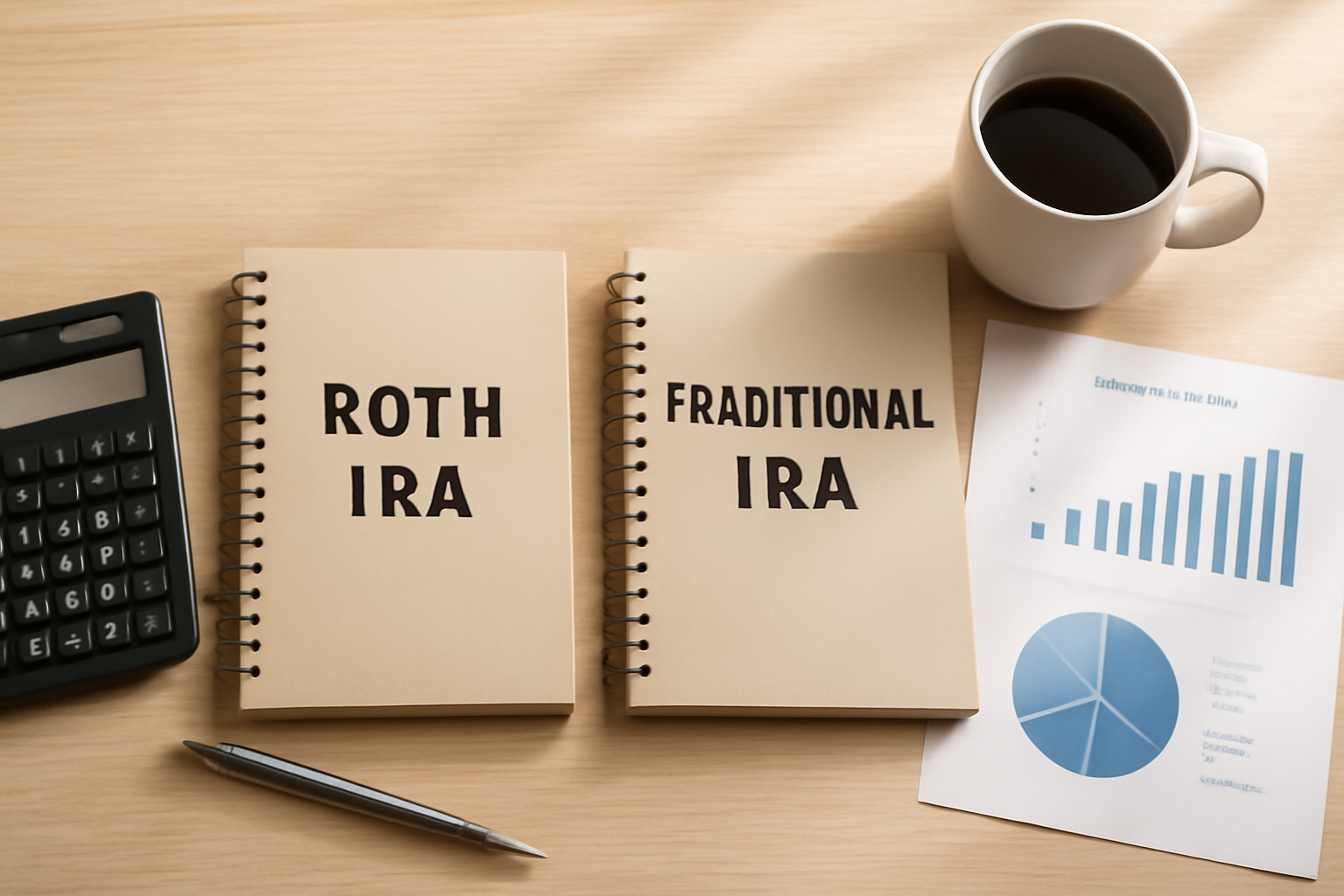
    Roth IRA vs Traditional IRA: Which One Wins?

    Choosing the wrong IRA could cost you tens of thousands of dollars in unnecessary taxes over your lifetime — here’s how to pick the right one.

    Introduction

    According to the Investment Company Institute, only about 36% of U.S. households owned an IRA as of 2025 — and many who do have one aren’t sure if they chose the right type. That gap between having an account and having the right account can mean a dramatically different retirement outcome.

    The two most common IRAs — the Roth IRA and the Traditional IRA — both offer powerful tax advantages. But they work in opposite ways, and picking the wrong one for your situation is a costly mistake that’s hard to undo.

    In this guide, you’ll learn exactly how each IRA works, who benefits most from each type, the step-by-step process for opening one, the fees and risks involved, the most common errors people make, and smart alternatives to consider. By the end, you’ll have a clear framework to decide which account belongs in your retirement strategy.

    This is for educational purposes — consult a licensed financial advisor for personalized guidance.


    What Is a Roth IRA vs. a Traditional IRA — and How Do They Work?

    An Individual Retirement Account (IRA) is a tax-advantaged savings account you open on your own — separate from any employer plan like a 401(k). Both Roth and Traditional IRAs allow your investments to grow without being taxed each year. The critical difference is when you pay taxes.

    Traditional IRA: You contribute pre-tax dollars (meaning you may get a tax deduction now), your money grows tax-deferred, and you pay ordinary income taxes when you withdraw in retirement. Think of it as: pay taxes later.

    Roth IRA: You contribute after-tax dollars (no deduction now), your money grows tax-free, and qualified withdrawals in retirement are completely tax-free. Think of it as: pay taxes now, never again.

    For 2026, the IRS sets the annual contribution limit at $7,000 per person (or $8,000 if you’re age 50 or older — this is called the "catch-up contribution"). This limit applies to your total IRA contributions combined, not per account.

    Both accounts accept the same types of investments: stocks, bonds, ETFs, index funds, mutual funds, and more. The account itself is just a tax wrapper — what you put inside it is up to you.


    Key Benefits — Why Each IRA Matters for Your Financial Future

    The Federal Reserve’s 2025 Survey of Consumer Finances found that the median retirement savings for Americans aged 55-64 was approximately $185,000 — far below what most financial planners recommend. Choosing the right IRA structure can meaningfully close that gap over time.

    Why the Roth IRA Stands Out

    • Tax-free growth and withdrawals: If you invest $7,000 per year starting at age 35 and it grows to $400,000 by retirement, you owe zero federal tax on that $400,000 when you withdraw it.
    • No Required Minimum Distributions (RMDs): Traditional IRAs force you to start withdrawing money at age 73 (per current IRS rules). Roth IRAs have no such requirement during your lifetime — giving you full control over your money.
    • Flexible access to contributions: You can withdraw your original contributions (not earnings) at any time, penalty-free. This makes it a secondary emergency layer for disciplined savers.
    • Better for estate planning: Heirs who inherit a Roth IRA generally receive funds tax-free, making it a powerful wealth transfer tool.

    Why the Traditional IRA Still Wins for Many People

    • Immediate tax deduction: If you qualify, contributions reduce your taxable income today. A $7,000 contribution in the 22% tax bracket saves you $1,540 in federal taxes right now.
    • Higher effective contribution: Because you save on taxes now, your real cost of contributing is lower — leaving more cash in your pocket today.
    • No income limits for contributing: Unlike the Roth IRA, anyone with earned income can contribute to a Traditional IRA (though the deductibility phases out at higher incomes if you have a workplace plan).

    How to Get Started — Step-by-Step Guide to Opening Your IRA

    Opening an IRA takes less than 30 minutes online. Here’s how to do it correctly:

    1. Check your eligibility. To contribute to either IRA, you must have earned income (wages, salary, self-employment income) equal to or greater than your contribution amount. For a Roth IRA, your Modified Adjusted Gross Income (MAGI) must be below the IRS phase-out range — in 2026, that’s $146,000–$161,000 for single filers and $230,000–$240,000 for married filing jointly. Above those limits, you cannot contribute directly to a Roth IRA.
    2. Choose your IRA type. Use this general rule: if you expect to be in a higher tax bracket in retirement than you are today, a Roth IRA generally wins. If you expect to be in a lower bracket in retirement, a Traditional IRA often makes more sense.
    3. Select a brokerage or financial institution. Major platforms like Fidelity, Vanguard, Schwab, and Betterment all offer IRAs with no account minimums and low-cost investment options. Look for zero trading commissions and access to low-expense-ratio index funds.
    4. Open the account online. You’ll need your Social Security number, a government-issued ID, your bank account information for funding, and basic personal details. Most applications take 10–20 minutes.
    5. Fund your account. Link your bank account and make your contribution. You have until the tax filing deadline (typically April 15) to make a prior-year IRA contribution. So in April 2026, you could still contribute for the 2025 tax year.
    6. Choose your investments. Don’t leave your money sitting in cash. At a minimum, consider a broad-market index fund or a target-date fund aligned to your expected retirement year. Leaving contributions uninvested is one of the most common and costly IRA mistakes.
    7. Automate contributions. Set up a monthly automatic transfer — even $200–$500 per month — so you stay consistent without relying on willpower.

    Costs, Fees, and Risks to Know Before You Open an IRA

    IRAs are generally low-cost, but there are fees and penalties that can quietly erode your returns if you’re not careful.

    Early Withdrawal Penalties

    If you withdraw earnings from a Traditional IRA before age 59½, you’ll pay ordinary income tax plus a 10% early withdrawal penalty. For a Roth IRA, withdrawing earnings before age 59½ (and before the account is 5 years old) also triggers the 10% penalty plus taxes on the earnings portion. Your original Roth contributions can always be withdrawn penalty-free, however.

    Investment Fees

    The investments inside your IRA carry their own costs. Actively managed mutual funds often charge expense ratios of 0.5%–1.5% annually. Index funds at Vanguard or Fidelity can cost as little as 0.03%–0.10%. On a $300,000 portfolio, that difference could amount to $4,000+ per year. Always check the expense ratio before choosing a fund.

    RMD Tax Risk

    Traditional IRA holders must begin taking Required Minimum Distributions at age 73. These withdrawals are taxed as ordinary income and can push you into a higher tax bracket, potentially increasing your Medicare premiums (through a surcharge called IRMAA) and making more of your Social Security benefits taxable.

    Contribution Limits and Excess Contributions

    Contributing more than the IRS limit results in a 6% excise tax on the excess amount for each year it remains in the account. Track your contributions carefully, especially if you have multiple IRAs.


    Common Mistakes to Avoid

    These are the errors that consistently cost Americans the most money when managing their IRAs:

    Mistake 1: Choosing Based on Today’s Tax Rate Alone

    Many people default to a Traditional IRA for the immediate deduction without modeling their future tax situation. If you’re currently in the 12% bracket but expect to be in the 22% or 24% bracket in retirement (from Social Security, RMDs, or investment income), you’ll pay more taxes overall. Run the numbers — or ask a CPA to help you compare scenarios.

    Mistake 2: Not Contributing Because the Market Seems "Too High"

    Timing the market inside an IRA is as problematic as anywhere else. The point of consistent annual contributions is to benefit from dollar-cost averaging — buying more shares when prices are low and fewer when prices are high. Missing years of contributions also means losing years of compound growth that can never be recaptured.

    Mistake 3: Leaving Contributions in Cash

    This is more common than you’d think. People open the account, transfer money, and never actually invest it. The money sits in a cash or money market position earning minimal interest. Your IRA doesn’t automatically invest your deposits — you must actively choose your investments.

    Mistake 4: Ignoring the Backdoor Roth IRA Option

    If your income exceeds the Roth IRA limits, many high earners don’t realize they can still access a Roth IRA through a strategy called the "Backdoor Roth IRA." This involves contributing to a non-deductible Traditional IRA and then converting it to a Roth. It’s legal, IRS-acknowledged, but requires careful execution — particularly if you have existing pre-tax IRA balances (due to the "pro-rata rule"). Always consult a tax professional before attempting this.

    Mistake 5: Not Naming a Beneficiary

    If you die without a named beneficiary on your IRA, the account may go through probate and your heirs could lose significant assets to delays and legal costs. Log in to your IRA provider today and confirm your beneficiary designation is current.


    Alternatives to Consider

    If an IRA isn’t the perfect fit — or you want to maximize your retirement savings beyond the $7,000 annual IRA limit — here are three strong alternatives:

    1. 401(k) or 403(b) Through Your Employer

    Pros: Much higher contribution limits — $23,500 in 2026 (plus $7,500 catch-up if you’re 50+). Many employers offer matching contributions, which is essentially free money. Reduces taxable income significantly.
    Cons: Limited investment options chosen by your employer. You typically can’t move funds while still employed without penalties.
    Best for: Anyone with an employer match should contribute at least enough to capture the full match before funding an IRA.

    2. Health Savings Account (HSA)

    Pros: Triple tax advantage — contributions are tax-deductible, growth is tax-free, and withdrawals for qualified medical expenses are tax-free. After age 65, you can withdraw for any reason (just paying ordinary income tax, like a Traditional IRA).
    Cons: Must be enrolled in a High-Deductible Health Plan (HDHP). Limited to healthcare expenses penalty-free before 65.
    Best for: Healthier individuals who can afford to invest their HSA contributions rather than spend them on current medical costs.

    3. Taxable Brokerage Account

    Pros: No contribution limits, no income restrictions, no withdrawal penalties. Extremely flexible.
    Cons: No upfront tax deduction, no tax-free growth. Capital gains taxes apply when you sell investments.
    Best for: Investors who have maxed out their IRA and 401(k) and want additional long-term investment exposure. Also useful for goals before retirement age, since there’s no early withdrawal penalty.


    Frequently Asked Questions

    Can I have both a Roth IRA and a Traditional IRA at the same time?

    Yes. You can hold both account types simultaneously. However, the $7,000 annual contribution limit (or $8,000 if 50+) applies to your total IRA contributions across all accounts combined — not per account. So you could put $3,500 in each, but not $7,000 in each.

    What happens to my IRA if I lose my job or change employers?

    Your IRA is completely independent of your employer — it’s yours and stays with you regardless of where you work. If you have a 401(k) from a former employer, you can roll it over into an IRA to consolidate your accounts and gain more investment flexibility.

    At what age should I switch from a Roth to a Traditional IRA?

    There’s no universal age trigger — it depends on your expected tax bracket in retirement. Generally speaking, younger workers in lower tax brackets benefit more from a Roth IRA, while mid-career or peak-earning professionals in high brackets may benefit more from the Traditional IRA’s upfront deduction. Many financial advisors suggest diversifying between both types to hedge against future tax uncertainty.

    Can I contribute to an IRA if I’m self-employed?

    Yes. Self-employed individuals can contribute to both Roth and Traditional IRAs as long as they have net self-employment income. They may also qualify for additional accounts like a SEP-IRA (which allows contributions up to 25% of net self-employment income, up to $69,000 in 2026) or a Solo 401(k), which offer significantly higher limits.

    What if I accidentally over-contribute to my IRA?

    You have until your tax filing deadline (including extensions) to withdraw the excess contribution and any associated earnings. If you miss that deadline, you’ll owe a 6% excise tax on the excess for each year it remains. Contact your IRA provider immediately if you realize you’ve over-contributed.


    Conclusion — What’s Your Next Move?

    The Roth IRA vs. Traditional IRA decision comes down to one core question: will your tax rate be higher now or in retirement? If you’re early in your career or in a lower tax bracket today, the Roth IRA’s tax-free growth is often the stronger long-term play. If you’re in your peak earning years and want to reduce your taxable income now, the Traditional IRA’s upfront deduction may be more valuable.

    In most cases, the best answer isn’t all-or-nothing — it’s strategic diversification between tax-deferred and tax-free accounts to give yourself flexibility no matter what tax rates look like in 20 or 30 years.

    Your most important action today: open the account if you haven’t, fund it consistently, and invest the money — don’t let it sit in cash. Even $100 per month invested consistently from age 35 can grow into a meaningful retirement cushion over time.

    And as always, consult a licensed financial advisor or CPA to map out a strategy specific to your income, tax situation, and retirement goals.


    Financial Disclaimer: This article is for educational purposes only and does not constitute financial, tax, or investment advice. Always consult a licensed financial advisor, CPA, or attorney before making financial decisions.