
Tag: Roth IRA

  • Dollar-Cost Averaging: The Smart Way to Invest Consistently

    Dollar-Cost Averaging: The Smart Way to Invest Consistently

    What Is Dollar-Cost Averaging and How Does It Work?

    Dollar-cost averaging (DCA) is an investment strategy where you invest a fixed dollar amount at regular intervals — weekly, biweekly, or monthly — regardless of what the market is doing. Instead of trying to time the market perfectly, you buy consistently over time.

    Here’s how it plays out in practice: suppose you invest $300 every month into an S&P 500 index fund. Some months, the fund is up and your $300 buys fewer shares. Other months, the market dips and your $300 stretches further, buying more shares at a lower price. Over time, your average cost per share tends to smooth out — reducing the risk of making one large investment right before a downturn.

    This strategy applies to virtually any investor who contributes regularly to a 401(k), Roth IRA, or taxable brokerage account. If you’ve ever had money automatically deducted from your paycheck into a retirement plan, you’ve already been using dollar-cost averaging — you just may not have known it by name.

    The core idea is simple: consistency beats timing. According to research from Vanguard, trying to time the market successfully over long periods is extremely difficult even for professional investors, making DCA a practical and psychologically sound alternative for most working Americans.

    Key Benefits of Dollar-Cost Averaging

    According to a 2024 Gallup survey, nearly 61% of Americans report owning stock — but a far smaller percentage invest with any kind of systematic strategy. Dollar-cost averaging offers several concrete advantages that make it especially well-suited for the average investor.

    1. Reduces Emotional Decision-Making

    Market volatility triggers fear. When the S&P 500 dropped roughly 25% in 2022, many investors panic-sold at a loss. DCA removes the emotional element by automating your investment schedule. You invest the same amount on the same date, no matter what the headlines say.

    2. Lowers Your Average Cost Per Share

    Because you buy more shares when prices are low and fewer when prices are high, your average cost per share can end up lower than if you had invested a lump sum at a single, potentially unfavorable price point. This is the mathematical core of the strategy.

    3. Accessible on Any Budget

    You don’t need $50,000 to get started. Many brokerage platforms — including Fidelity and Charles Schwab — now offer fractional shares and zero-minimum accounts, meaning you can start DCA with as little as $25 or $50 a month. This democratizes investing for people who are still building their income.

    4. Builds Long-Term Wealth Through Compounding

    When you invest $300 a month at an average annual return of 7% (a historically reasonable long-term estimate for diversified stock portfolios, though not guaranteed), you’d have approximately $180,000 after 25 years. The combination of regular contributions and compounding interest is a powerful wealth-building engine over time.

    5. Works in Up and Down Markets

    Unlike lump-sum investing, which is most effective when markets are trending upward immediately after your investment, DCA performs well across different market environments. It doesn’t require you to predict market direction — which is something very few investors do successfully.

    How to Get Started with Dollar-Cost Averaging: Step-by-Step

    Setting up a DCA strategy is straightforward. Here’s a practical roadmap tailored for U.S. investors in their 30s through 60s.

    1. Define your monthly investment amount. Start with what you can afford to invest consistently without disrupting your budget. Even $100 a month is a meaningful start. The key is sustainability — choose an amount you won’t need to stop contributing during a tough month.
    2. Choose an account type. If you have access to a 401(k) through your employer, maximize that first — especially if your employer matches contributions (that’s an immediate 50–100% return on part of your investment). Next, consider a Roth IRA (2026 contribution limit: $7,000, or $8,000 if you’re 50 or older). For additional investing beyond tax-advantaged accounts, a taxable brokerage account works well.
    3. Select your investment vehicle. For most DCA investors, low-cost index funds or ETFs that track broad market indices — like the S&P 500 or total stock market — are the most efficient vehicles. They offer instant diversification and typically have expense ratios under 0.10%.
    4. Set up automatic contributions. Log in to your brokerage or retirement plan and schedule recurring automatic transfers on your preferred date. Automating removes the willpower element entirely — you never have to decide whether to invest each month.
    5. Stay the course during downturns. This is where most DCA investors struggle. When the market drops 15%, resist the urge to pause contributions. A market dip is actually an opportunity — your fixed dollar amount buys more shares at lower prices. Historically, U.S. markets have recovered from every downturn, though past performance does not guarantee future results.
    6. Review annually, not daily. Check your portfolio allocation once or twice a year to ensure it still aligns with your risk tolerance and timeline. Rebalance if one asset class has grown significantly out of proportion. But avoid checking your balance every day — it leads to emotional decisions.

    Costs, Fees, and Risks You Should Know

    Dollar-cost averaging is low-cost by design, but there are still real risks and expenses to factor in before you commit.

    Transaction Fees

    Most major U.S. brokerages — Fidelity, Schwab, Vanguard, and others — now offer commission-free stock and ETF trades. However, some mutual funds may still carry transaction fees or sales loads. Always verify the fee structure before selecting your investment vehicle.

    Expense Ratios

    Even a small difference in fund fees compounds significantly over time. A fund with a 1% expense ratio costs you 10 times more annually than one with 0.10%. Over 30 years, that difference can add up to tens of thousands of dollars in lost returns. Always compare expense ratios before investing.

    Tax Implications in Taxable Accounts

    In a taxable brokerage account, each purchase creates a separate tax lot. When you eventually sell, the IRS requires you to track your cost basis for each purchase. This can become administratively complex over time. Tax-advantaged accounts like 401(k)s and IRAs avoid this issue since gains aren’t taxed until withdrawal (or not at all, in the case of Roth accounts).

    Market Risk Still Exists

    DCA does not eliminate market risk. If you invest regularly into a declining asset class over a long period and that asset never recovers, you will still lose money. Diversification across asset classes — stocks, bonds, and potentially real estate via REITs — helps manage this risk, but no strategy is entirely risk-free.

    Opportunity Cost vs. Lump-Sum Investing

    Research from Vanguard found that lump-sum investing outperforms DCA approximately two-thirds of the time in rising markets. This makes sense mathematically — money invested earlier has more time to compound. However, DCA remains the superior choice for investors who don’t have a large lump sum available, or who would otherwise let fear keep them on the sidelines entirely.

    Common Dollar-Cost Averaging Mistakes to Avoid

    Even a straightforward strategy like DCA can go wrong when investors make predictable errors. Here are the most costly ones to watch out for.

    Mistake 1: Stopping Contributions During Market Crashes

    The most damaging thing you can do to a DCA strategy is pause your contributions exactly when the market drops. This eliminates the core advantage of the strategy — buying more shares at lower prices. In March 2020, when the market fell roughly 34% in weeks, investors who stopped their DCA contributions missed one of the most powerful recovery rallies in U.S. market history. Stay the course.

    Mistake 2: Choosing High-Fee Funds

    Investing $300 a month consistently for 30 years is impressive. But if you’re doing it inside a mutual fund with a 1.5% annual expense ratio instead of a 0.03% index fund, the fee difference alone could cost you upward of $100,000 over your investing lifetime. Always check the expense ratio before hitting "buy."

    Mistake 3: Not Taking Advantage of Tax-Advantaged Accounts First

    Many investors open a standard taxable brokerage account before maximizing their 401(k) match or Roth IRA. That’s leaving free money and tax benefits on the table. In 2026, you can contribute up to $23,500 to a 401(k) (or $31,000 if you’re 50 or older). Prioritize these accounts before investing in taxable accounts. For more on maximizing retirement accounts, our guide on Roth IRA conversion strategy is a useful starting point.

    Mistake 4: Investing in a Single Stock Instead of Diversified Funds

    DCA works best when applied to diversified, broad-market investments. Applying it to a single company’s stock concentrates your risk significantly — if that company underperforms or goes bankrupt, your entire DCA portfolio suffers. Stick to diversified index funds or ETFs as your primary DCA vehicle.

    Mistake 5: Ignoring Inflation on Fixed Contribution Amounts

    If you set a $200/month contribution in 2015 and never adjusted it, you’re effectively investing less in real terms by 2026 due to inflation. As your income grows, revisit your contribution amount annually and increase it proportionally. Even a $25 or $50 monthly increase each year compounds into significantly higher returns over time.

    Alternatives to Dollar-Cost Averaging

    DCA is not the only way to invest systematically. Depending on your financial situation, one of these alternatives may be a better fit — or a useful complement.

    1. Lump-Sum Investing

    Best for: Investors who receive a windfall (inheritance, bonus, or 401(k) rollover) and have a long time horizon.
    Pros: Historically outperforms DCA in rising markets; maximizes time in the market.
    Cons: Requires strong emotional discipline during immediate volatility; poor timing can result in short-term paper losses. If you’re considering a large rollover, review how it fits with your broader financial plan before acting.

    2. Value Averaging

    Best for: More sophisticated investors who want to be more aggressive during downturns.
    Pros: Adjusts your contributions based on portfolio performance — you invest more when the market drops and less when it rises, potentially outperforming standard DCA.
    Cons: Requires more active management, discipline, and liquidity. You may need to contribute substantially more during downturns than your budget allows.

    3. Target-Date Funds with Automatic Contributions

    Best for: Investors who want a completely hands-off approach, especially within a 401(k).
    Pros: Automatically adjusts asset allocation as you approach retirement; built-in diversification.
    Cons: Typically carry slightly higher expense ratios than individual index funds; less flexibility in asset allocation control. Still, for many investors — particularly those who find investing overwhelming — these funds combined with automatic contributions represent an effective DCA approach by default.

    Frequently Asked Questions About Dollar-Cost Averaging

    Is dollar-cost averaging better than lump-sum investing?

    It depends on your situation. Research from Vanguard shows lump-sum investing outperforms DCA about two-thirds of the time in historically rising markets. However, DCA is the better choice if you don’t have a large lump sum, if you’re investing monthly from your paycheck, or if market volatility would cause you to panic-sell after a large one-time investment. The best strategy is one you’ll actually stick to.

    What is a good amount to start with for DCA?

    There’s no universal right answer, but $100 to $500 per month is a realistic range for most working professionals. What matters more than the dollar amount is consistency. Start with what you can sustain without financial stress, then increase the amount as your income grows. Many brokerage platforms allow automatic investments with no minimum.

    Can I use DCA inside a Roth IRA?

    Absolutely — and it’s one of the most tax-efficient ways to apply DCA. You contribute after-tax dollars, your investments grow tax-free, and qualified withdrawals in retirement are also tax-free. The 2026 Roth IRA contribution limit is $7,000 (or $8,000 if you’re 50 or older), subject to income limits set by the IRS.

    Does dollar-cost averaging work in a bear market?

    Yes — and it arguably works best in bear markets. When asset prices fall, your fixed monthly contribution buys more shares. If the market eventually recovers (as U.S. markets have historically done over long periods), those extra shares purchased at lower prices contribute significantly to your long-term gains. The critical requirement is that you must continue investing during the downturn rather than stopping out of fear.

    How do I track my average cost per share with DCA?

    Most brokerage platforms automatically track your average cost basis across all purchases. You can view this in your account’s portfolio section. For tax purposes in taxable accounts, you can also choose a cost-basis accounting method — such as FIFO (first in, first out) or specific identification — which your broker will apply when you sell shares. Consult a CPA if you’re unsure which method is most tax-efficient for your situation.

    Final Takeaways: Is Dollar-Cost Averaging Right for You?

    Dollar-cost averaging won’t make you rich overnight, and it doesn’t eliminate market risk. What it does is give you a disciplined, accessible, and emotionally sustainable framework for building wealth over time — one that works whether you’re just starting out in your 30s or adding to an established portfolio in your 50s and 60s.

    The most powerful thing about DCA isn’t the math — it’s the habit. Investors who contribute consistently, avoid panic-selling, and keep their fees low tend to build significantly more wealth over time than those who try to outsmart the market with perfect timing.

    If you’re already contributing to a 401(k) or Roth IRA, you’re already doing it. If you’re not, today is a reasonable time to start — whether that means opening a brokerage account, setting up automatic contributions, or simply increasing what you’re already putting in each month.

    Take one concrete next step this week: calculate what you can comfortably invest each month, open or log in to your investment account, and set up an automatic recurring contribution. Small, consistent actions compound into meaningful financial outcomes over time.

    This article is for educational purposes only and does not constitute financial, tax, or investment advice. Always consult a licensed financial advisor, CPA, or attorney before making financial decisions.
  • Roth IRA vs Traditional IRA: Which One Wins?

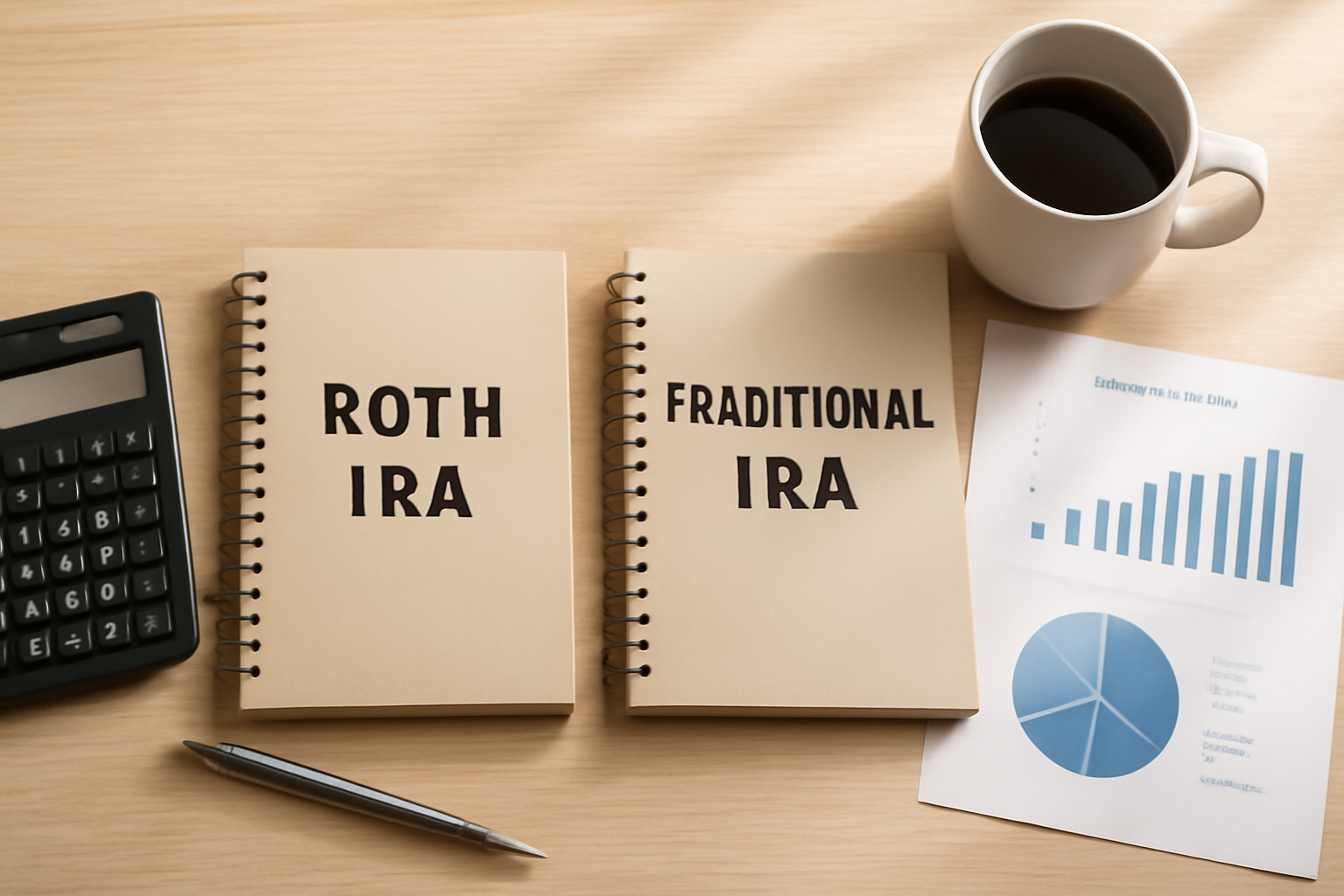
    Roth IRA vs Traditional IRA: Which One Wins?

    Choosing the wrong IRA could cost you tens of thousands of dollars in unnecessary taxes over your lifetime — here’s how to pick the right one.

    Introduction

    According to the Investment Company Institute, only about 36% of U.S. households owned an IRA as of 2025 — and many who do have one aren’t sure if they chose the right type. That gap between having an account and having the right account can mean a dramatically different retirement outcome.

    The two most common IRAs — the Roth IRA and the Traditional IRA — both offer powerful tax advantages. But they work in opposite ways, and picking the wrong one for your situation is a costly mistake that’s hard to undo.

    In this guide, you’ll learn exactly how each IRA works, who benefits most from each type, the step-by-step process for opening one, the fees and risks involved, the most common errors people make, and smart alternatives to consider. By the end, you’ll have a clear framework to decide which account belongs in your retirement strategy.

    This is for educational purposes — consult a licensed financial advisor for personalized guidance.


    What Is a Roth IRA vs. a Traditional IRA — and How Do They Work?

    An Individual Retirement Account (IRA) is a tax-advantaged savings account you open on your own — separate from any employer plan like a 401(k). Both Roth and Traditional IRAs allow your investments to grow without being taxed each year. The critical difference is when you pay taxes.

    Traditional IRA: You contribute pre-tax dollars (meaning you may get a tax deduction now), your money grows tax-deferred, and you pay ordinary income taxes when you withdraw in retirement. Think of it as: pay taxes later.

    Roth IRA: You contribute after-tax dollars (no deduction now), your money grows tax-free, and qualified withdrawals in retirement are completely tax-free. Think of it as: pay taxes now, never again.

    For 2026, the IRS sets the annual contribution limit at $7,000 per person (or $8,000 if you’re age 50 or older — this is called the "catch-up contribution"). This limit applies to your total IRA contributions combined, not per account.

    Both accounts accept the same types of investments: stocks, bonds, ETFs, index funds, mutual funds, and more. The account itself is just a tax wrapper — what you put inside it is up to you.


    Key Benefits — Why Each IRA Matters for Your Financial Future

    The Federal Reserve’s 2025 Survey of Consumer Finances found that the median retirement savings for Americans aged 55-64 was approximately $185,000 — far below what most financial planners recommend. Choosing the right IRA structure can meaningfully close that gap over time.

    Why the Roth IRA Stands Out

    • Tax-free growth and withdrawals: If you invest $7,000 per year starting at age 35 and it grows to $400,000 by retirement, you owe zero federal tax on that $400,000 when you withdraw it.
    • No Required Minimum Distributions (RMDs): Traditional IRAs force you to start withdrawing money at age 73 (per current IRS rules). Roth IRAs have no such requirement during your lifetime — giving you full control over your money.
    • Flexible access to contributions: You can withdraw your original contributions (not earnings) at any time, penalty-free. This makes it a secondary emergency layer for disciplined savers.
    • Better for estate planning: Heirs who inherit a Roth IRA generally receive funds tax-free, making it a powerful wealth transfer tool.

    Why the Traditional IRA Still Wins for Many People

    • Immediate tax deduction: If you qualify, contributions reduce your taxable income today. A $7,000 contribution in the 22% tax bracket saves you $1,540 in federal taxes right now.
    • Higher effective contribution: Because you save on taxes now, your real cost of contributing is lower — leaving more cash in your pocket today.
    • No income limits for contributing: Unlike the Roth IRA, anyone with earned income can contribute to a Traditional IRA (though the deductibility phases out at higher incomes if you have a workplace plan).

    How to Get Started — Step-by-Step Guide to Opening Your IRA

    Opening an IRA takes less than 30 minutes online. Here’s how to do it correctly:

    1. Check your eligibility. To contribute to either IRA, you must have earned income (wages, salary, self-employment income) equal to or greater than your contribution amount. For a Roth IRA, your Modified Adjusted Gross Income (MAGI) must be below the IRS phase-out range — in 2026, that’s $146,000–$161,000 for single filers and $230,000–$240,000 for married filing jointly. Above those limits, you cannot contribute directly to a Roth IRA.
    2. Choose your IRA type. Use this general rule: if you expect to be in a higher tax bracket in retirement than you are today, a Roth IRA generally wins. If you expect to be in a lower bracket in retirement, a Traditional IRA often makes more sense.
    3. Select a brokerage or financial institution. Major platforms like Fidelity, Vanguard, Schwab, and Betterment all offer IRAs with no account minimums and low-cost investment options. Look for zero trading commissions and access to low-expense-ratio index funds.
    4. Open the account online. You’ll need your Social Security number, a government-issued ID, your bank account information for funding, and basic personal details. Most applications take 10–20 minutes.
    5. Fund your account. Link your bank account and make your contribution. You have until the tax filing deadline (typically April 15) to make a prior-year IRA contribution. So in April 2026, you could still contribute for the 2025 tax year.
    6. Choose your investments. Don’t leave your money sitting in cash. At a minimum, consider a broad-market index fund or a target-date fund aligned to your expected retirement year. Leaving contributions uninvested is one of the most common and costly IRA mistakes.
    7. Automate contributions. Set up a monthly automatic transfer — even $200–$500 per month — so you stay consistent without relying on willpower.

    Costs, Fees, and Risks to Know Before You Open an IRA

    IRAs are generally low-cost, but there are fees and penalties that can quietly erode your returns if you’re not careful.

    Early Withdrawal Penalties

    If you withdraw earnings from a Traditional IRA before age 59½, you’ll pay ordinary income tax plus a 10% early withdrawal penalty. For a Roth IRA, withdrawing earnings before age 59½ (and before the account is 5 years old) also triggers the 10% penalty plus taxes on the earnings portion. Your original Roth contributions can always be withdrawn penalty-free, however.

    Investment Fees

    The investments inside your IRA carry their own costs. Actively managed mutual funds often charge expense ratios of 0.5%–1.5% annually. Index funds at Vanguard or Fidelity can cost as little as 0.03%–0.10%. On a $300,000 portfolio, that difference could amount to $4,000+ per year. Always check the expense ratio before choosing a fund.

    RMD Tax Risk

    Traditional IRA holders must begin taking Required Minimum Distributions at age 73. These withdrawals are taxed as ordinary income and can push you into a higher tax bracket, potentially increasing your Medicare premiums (through a surcharge called IRMAA) and making more of your Social Security benefits taxable.

    Contribution Limits and Excess Contributions

    Contributing more than the IRS limit results in a 6% excise tax on the excess amount for each year it remains in the account. Track your contributions carefully, especially if you have multiple IRAs.


    Common Mistakes to Avoid

    These are the errors that consistently cost Americans the most money when managing their IRAs:

    Mistake 1: Choosing Based on Today’s Tax Rate Alone

    Many people default to a Traditional IRA for the immediate deduction without modeling their future tax situation. If you’re currently in the 12% bracket but expect to be in the 22% or 24% bracket in retirement (from Social Security, RMDs, or investment income), you’ll pay more taxes overall. Run the numbers — or ask a CPA to help you compare scenarios.

    Mistake 2: Not Contributing Because the Market Seems "Too High"

    Timing the market inside an IRA is as problematic as anywhere else. The point of consistent annual contributions is to benefit from dollar-cost averaging — buying more shares when prices are low and fewer when prices are high. Missing years of contributions also means losing years of compound growth that can never be recaptured.

    Mistake 3: Leaving Contributions in Cash

    This is more common than you’d think. People open the account, transfer money, and never actually invest it. The money sits in a cash or money market position earning minimal interest. Your IRA doesn’t automatically invest your deposits — you must actively choose your investments.

    Mistake 4: Ignoring the Backdoor Roth IRA Option

    If your income exceeds the Roth IRA limits, many high earners don’t realize they can still access a Roth IRA through a strategy called the "Backdoor Roth IRA." This involves contributing to a non-deductible Traditional IRA and then converting it to a Roth. It’s legal, IRS-acknowledged, but requires careful execution — particularly if you have existing pre-tax IRA balances (due to the "pro-rata rule"). Always consult a tax professional before attempting this.

    Mistake 5: Not Naming a Beneficiary

    If you die without a named beneficiary on your IRA, the account may go through probate and your heirs could lose significant assets to delays and legal costs. Log in to your IRA provider today and confirm your beneficiary designation is current.


    Alternatives to Consider

    If an IRA isn’t the perfect fit — or you want to maximize your retirement savings beyond the $7,000 annual IRA limit — here are three strong alternatives:

    1. 401(k) or 403(b) Through Your Employer

    Pros: Much higher contribution limits — $23,500 in 2026 (plus $7,500 catch-up if you’re 50+). Many employers offer matching contributions, which is essentially free money. Reduces taxable income significantly.
    Cons: Limited investment options chosen by your employer. You typically can’t move funds while still employed without penalties.
    Best for: Anyone with an employer match should contribute at least enough to capture the full match before funding an IRA.

    2. Health Savings Account (HSA)

    Pros: Triple tax advantage — contributions are tax-deductible, growth is tax-free, and withdrawals for qualified medical expenses are tax-free. After age 65, you can withdraw for any reason (just paying ordinary income tax, like a Traditional IRA).
    Cons: Must be enrolled in a High-Deductible Health Plan (HDHP). Limited to healthcare expenses penalty-free before 65.
    Best for: Healthier individuals who can afford to invest their HSA contributions rather than spend them on current medical costs.

    3. Taxable Brokerage Account

    Pros: No contribution limits, no income restrictions, no withdrawal penalties. Extremely flexible.
    Cons: No upfront tax deduction, no tax-free growth. Capital gains taxes apply when you sell investments.
    Best for: Investors who have maxed out their IRA and 401(k) and want additional long-term investment exposure. Also useful for goals before retirement age, since there’s no early withdrawal penalty.


    Frequently Asked Questions

    Can I have both a Roth IRA and a Traditional IRA at the same time?

    Yes. You can hold both account types simultaneously. However, the $7,000 annual contribution limit (or $8,000 if 50+) applies to your total IRA contributions across all accounts combined — not per account. So you could put $3,500 in each, but not $7,000 in each.

    What happens to my IRA if I lose my job or change employers?

    Your IRA is completely independent of your employer — it’s yours and stays with you regardless of where you work. If you have a 401(k) from a former employer, you can roll it over into an IRA to consolidate your accounts and gain more investment flexibility.

    At what age should I switch from a Roth to a Traditional IRA?

    There’s no universal age trigger — it depends on your expected tax bracket in retirement. Generally speaking, younger workers in lower tax brackets benefit more from a Roth IRA, while mid-career or peak-earning professionals in high brackets may benefit more from the Traditional IRA’s upfront deduction. Many financial advisors suggest diversifying between both types to hedge against future tax uncertainty.

    Can I contribute to an IRA if I’m self-employed?

    Yes. Self-employed individuals can contribute to both Roth and Traditional IRAs as long as they have net self-employment income. They may also qualify for additional accounts like a SEP-IRA (which allows contributions up to 25% of net self-employment income, up to $69,000 in 2026) or a Solo 401(k), which offer significantly higher limits.

    What if I accidentally over-contribute to my IRA?

    You have until your tax filing deadline (including extensions) to withdraw the excess contribution and any associated earnings. If you miss that deadline, you’ll owe a 6% excise tax on the excess for each year it remains. Contact your IRA provider immediately if you realize you’ve over-contributed.


    Conclusion — What’s Your Next Move?

    The Roth IRA vs. Traditional IRA decision comes down to one core question: will your tax rate be higher now or in retirement? If you’re early in your career or in a lower tax bracket today, the Roth IRA’s tax-free growth is often the stronger long-term play. If you’re in your peak earning years and want to reduce your taxable income now, the Traditional IRA’s upfront deduction may be more valuable.

    In most cases, the best answer isn’t all-or-nothing — it’s strategic diversification between tax-deferred and tax-free accounts to give yourself flexibility no matter what tax rates look like in 20 or 30 years.

    Your most important action today: open the account if you haven’t, fund it consistently, and invest the money — don’t let it sit in cash. Even $100 per month invested consistently from age 35 can grow into a meaningful retirement cushion over time.

    And as always, consult a licensed financial advisor or CPA to map out a strategy specific to your income, tax situation, and retirement goals.


    Financial Disclaimer: This article is for educational purposes only and does not constitute financial, tax, or investment advice. Always consult a licensed financial advisor, CPA, or attorney before making financial decisions.