Bond Ladder Strategy: How to Build Steady Income
Learn how a bond ladder can generate predictable cash flow and reduce interest rate risk — a strategy used by thousands of retirees and conservative investors across the US.
Introduction
According to the Federal Reserve’s 2025 Survey of Consumer Finances, nearly 45% of Americans within a decade of retirement have little to no fixed-income allocation in their portfolios. That’s a significant gap — especially when stock market volatility can wipe out years of gains right when you need stability most.
If you’re a working professional or small business owner between 40 and 65, you’ve probably asked yourself: How do I generate reliable income without betting everything on the stock market? The bond ladder strategy is one of the most time-tested answers to that question.
In this guide, you’ll learn exactly what a bond ladder is, how it works in practical terms, what it costs to build one, and the most common mistakes investors make when setting one up. By the end, you’ll know whether this approach fits your financial situation — and how to get started.
What Is a Bond Ladder and How Does It Work?
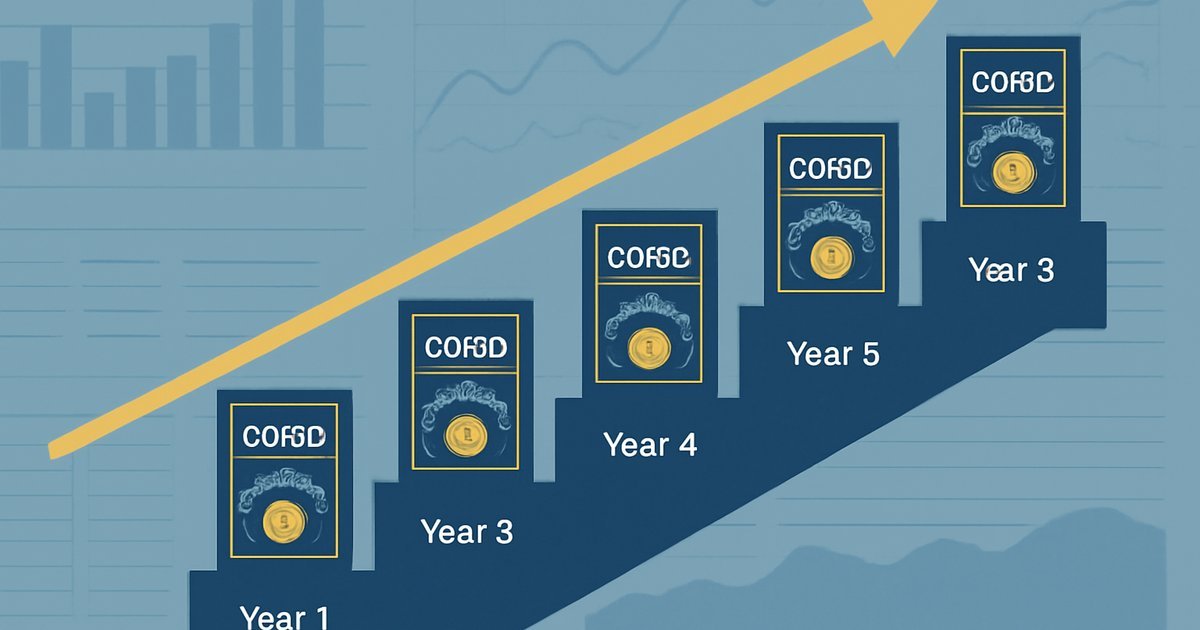
A bond ladder is an investment strategy where you purchase multiple bonds with staggered maturity dates — for example, bonds maturing in 1 year, 2 years, 3 years, 4 years, and 5 years. As each bond matures, you either spend the proceeds (if you need income) or reinvest them into a new long-term bond at the end of the ladder.
Think of it like rungs on a ladder. Each rung represents a bond at a different maturity. You’re never fully locked into one interest rate environment, and you always have bonds coming due at regular intervals.
Who does this apply to? Generally speaking, bond ladders are most useful for:
- Pre-retirees and retirees who need predictable income
- Conservative investors uncomfortable with heavy stock market exposure
- Small business owners who need to park reserves safely
- Anyone with a specific future cash need (tuition, a home purchase, or a business investment)
Bonds themselves are essentially loans you make to a government or corporation. In return, the issuer pays you interest — called a coupon — at regular intervals and returns your principal at maturity. The US bond market is the largest in the world, with over $50 trillion in outstanding debt, according to data from the Securities Industry and Financial Markets Association (SIFMA).
Key Benefits of a Bond Ladder
The bond ladder strategy offers several concrete advantages over simply buying a single bond or a bond mutual fund — and understanding those differences matters when you’re protecting decades of savings.
1. Reduces Interest Rate Risk
When interest rates rise, bond prices fall. If you own a single long-term bond and rates spike, your investment loses value — at least on paper. With a ladder, only a portion of your holdings is exposed to any single rate environment. As shorter-term bonds mature, you reinvest at higher prevailing rates, which actually benefits you over time.
2. Provides Predictable Cash Flow
Every rung of your ladder produces income on a known schedule. For retirees, this can replace or supplement Social Security income with guaranteed payouts. According to Vanguard’s fixed-income research, investors who ladder Treasury bonds can generate consistent income streams over 5 to 20 years without relying on fund manager decisions.
3. Eliminates Fund Manager Risk
Unlike bond mutual funds, individual bonds in a ladder have a defined maturity date. You get your principal back — period. Bond funds, by contrast, can and do lose value with no guaranteed recovery timeline.
4. Liquidity at Regular Intervals
With bonds maturing regularly, you always have access to cash without being forced to sell at a loss. In most cases, this predictability makes financial planning far more manageable — especially in retirement.
For example, consider Sarah, 58, a former marketing director. She built a $200,000 bond ladder using US Treasuries spread across five years. Every 12 months, $40,000 matures — giving her a reliable cash cushion while her 401(k) stays invested in stocks for growth.
How to Build a Bond Ladder: Step-by-Step
Building a bond ladder is more straightforward than most investors expect. Here’s how to do it in plain terms.
- Determine your total investment amount. Bond ladders generally work best with at least $50,000 to $100,000, though some platforms allow you to start smaller. Decide how much you want to allocate to fixed income based on your overall asset allocation.
- Choose your bond types. You have several options:
- US Treasury bonds — backed by the full faith and credit of the US government, essentially zero default risk
- Municipal bonds (munis) — often tax-exempt at the federal level, great for high earners in higher brackets
- Corporate bonds — higher yields but more risk; investment-grade corporate bonds (rated BBB or higher by S&P) are most common in ladders
- FDIC-insured CDs (Certificates of Deposit) — a simpler ladder alternative for smaller amounts
- Select your time horizon and rung intervals. A typical ladder spans 5 to 10 years with annual maturities. A 5-year ladder might have bonds maturing in 2026, 2027, 2028, 2029, and 2030.
- Purchase bonds through a brokerage. Fidelity, Vanguard, Charles Schwab, and TD Ameritrade all offer bond screeners and secondary market access. You can also buy Treasury bonds directly at TreasuryDirect.gov with no fees.
- Decide on a reinvestment rule. When a bond matures, will you reinvest at the long end of the ladder or spend the proceeds? Define this in advance so emotions don’t drive the decision during market volatility.
- Track coupon payment schedules. Many investors stagger bonds so that coupon payments arrive monthly or quarterly, providing a more consistent income stream rather than semi-annual lump sums.
If you’re also focused on consistent accumulation strategies, pairing a bond ladder with a dollar-cost averaging approach for your equity allocation can provide a strong balance between growth and stability.
Costs, Fees, and Risks to Understand
No strategy is without drawbacks. In most cases, a bond ladder is a low-cost approach — but there are real costs and risks to account for before you commit.
Transaction Costs and Markups
When buying bonds on the secondary market through a broker, you often pay a markup — the difference between what the dealer paid and what you pay. These markups can range from 0.5% to 2% of the bond’s face value, according to FINRA data. Always compare prices across brokers or use TreasuryDirect for new Treasury issues to avoid markups entirely.
Inflation Risk
If inflation rises significantly, fixed coupon payments lose purchasing power. One solution: include Treasury Inflation-Protected Securities (TIPS) in your ladder. TIPS adjust their principal value with the Consumer Price Index (CPI), providing some inflation protection.
Default Risk
Corporate bonds carry default risk — the issuer might not be able to repay you. Sticking to investment-grade bonds (rated BBB- or above) and limiting corporate bonds to no more than 30–40% of your ladder significantly reduces this risk.
Liquidity Risk
If you need to sell a bond before it matures, you may get less than face value — particularly if interest rates have risen since you bought it. This is why matching your bond maturities to your actual cash needs is critical.
Tax Implications
Interest income from Treasury bonds is subject to federal income tax but exempt from state and local taxes. Municipal bond interest is typically exempt from federal tax. Corporate bond interest is fully taxable. Depending on your tax bracket, the after-tax yield of a muni bond may exceed a higher-yielding corporate bond. Always run the numbers or consult a CPA.
This is for educational purposes — consult a licensed financial advisor for personalized guidance specific to your tax situation and income level.
Common Mistakes to Avoid
Even a well-designed bond ladder can underperform or cause headaches if you make these common errors.
Mistake 1: Ignoring Credit Quality
Chasing yield by buying low-rated bonds (BB or below — so-called "junk bonds") can work in certain economic conditions, but it introduces significant default risk into what’s supposed to be a stable strategy. In most cases, a bond ladder should be anchored in investment-grade securities.
Mistake 2: Not Matching Maturities to Cash Needs
If you build a 10-year ladder but need significant cash in year 3 for a home purchase or medical expense, you may be forced to sell bonds at a loss. Before building your ladder, map out your expected financial needs for each year of the ladder’s duration.
Mistake 3: Over-concentrating in One Issuer
Some investors buy multiple bonds from the same corporation to get consistent higher yields. If that company faces financial trouble, multiple rungs of your ladder could be at risk simultaneously. Diversify across issuers and sectors.
Mistake 4: Forgetting to Reinvest Strategically
When a bond matures, many investors simply let the cash sit in a money market account indefinitely. This defeats the purpose of the ladder. Set a reminder or automatic reinvestment rule to keep the strategy working for you.
Mistake 5: Underestimating Inflation’s Erosion
A 4% yield sounds solid — until inflation runs at 5%. Over a 10-year ladder, this gap can meaningfully reduce your real purchasing power. Consider mixing in TIPS or I-Bonds (US Savings Bonds with inflation adjustments) to hedge this risk.
Alternatives to Consider
A bond ladder isn’t the only way to generate fixed income. Depending on your situation, one of these alternatives might suit you better — or work alongside a ladder.
1. Bond Mutual Funds or ETFs
Pros: Instant diversification, easy to manage, low minimums, highly liquid.
Cons: No guaranteed maturity date or principal return; fund value fluctuates daily; less control over individual holdings.
Best for: Beginners or those with smaller portfolios who want broad fixed-income exposure without managing individual bonds. For more on ETFs, you can explore real estate income investing as a complementary strategy.
2. High-Yield Savings Accounts and CDs
Pros: FDIC-insured up to $250,000 per depositor, simple to set up, predictable returns.
Cons: Yields are typically lower than bonds, especially for longer-term CDs; interest is fully taxable.
Best for: Investors who want a simpler version of the ladder concept with lower minimums and no broker required.
3. Annuities (Fixed or Fixed-Indexed)
Pros: Can guarantee income for life, useful for longevity planning in retirement.
Cons: Complex product structures, high surrender charges, and often significant insurance company fees. Generally speaking, these products require careful evaluation by a licensed advisor before purchase.
Best for: Retirees who want income they literally cannot outlive and who have already maxed out other retirement vehicles.
Frequently Asked Questions
How much money do I need to start a bond ladder?
You can start with as little as $1,000 using CDs or I-Bonds from TreasuryDirect.gov, but a traditional Treasury or corporate bond ladder typically requires $50,000 to $100,000 to build meaningful diversification across maturities. For smaller amounts, a short-term bond ETF may be more practical.
Are bond ladders good for retirement income?
Yes — in most cases, bond ladders are an excellent complement to Social Security and 401(k) withdrawals in retirement. They provide predictable cash flow and eliminate the risk of being forced to sell stocks during market downturns to cover expenses.
What’s the best type of bond for a ladder?
US Treasury bonds and TIPS are the most common choices because they carry no default risk. For investors in higher tax brackets (32% or above), municipal bonds may offer better after-tax yields. Corporate bonds can boost returns but add risk — stick to investment-grade if you include them.
What happens if interest rates rise after I build my ladder?
Rising rates will reduce the market value of your existing bonds, but this doesn’t matter if you hold them to maturity — you’ll still receive your full principal back. Meanwhile, as shorter-term bonds mature, you reinvest at higher rates, which actually benefits you over time.
Can I build a bond ladder inside a Roth IRA or 401(k)?
Yes. Building a bond ladder inside a tax-advantaged account like a Roth IRA or traditional IRA shields coupon payments from annual taxation — a significant benefit, especially for corporate bonds. However, IRS contribution limits apply to these accounts, and you’d be using funds already inside the account to purchase the bonds.
Conclusion
A bond ladder is one of the most disciplined, transparent, and time-tested strategies for generating reliable income from your portfolio. It doesn’t promise outsized returns — and that’s exactly the point. It gives you predictability, protection from interest rate swings, and flexibility when life gets expensive.
If you’re within 10 to 15 years of retirement or simply need a portion of your portfolio to behave with more certainty, building even a modest ladder of US Treasuries is a concrete first step worth taking. Start by mapping out your cash needs over the next five years, then explore TreasuryDirect.gov or a major brokerage’s bond screener to price out your first rungs.
As always, your specific tax bracket, income needs, and overall financial picture will shape how a bond ladder should look for you. Working with a licensed financial advisor or CPA is the best way to tailor this strategy to your situation.
Financial Disclaimer: This article is for educational purposes only and does not constitute financial, tax, or investment advice. Always consult a licensed financial advisor, CPA, or attorney before making financial decisions.
Leave a Reply